Recipe for “Languages of South Asia”
As part of my series on “Food of the World”, I’ve been writing up the recipes for food I cook for my “Languages of the World” course at NTU Singapore. It’s a course that gives an overview of world languages, highlighting theories about language development and human migration, as well as surveying major families, linguistic typology, and the cultures and practices of different groups. The food component, where I cook food from a linguistic group represented in that week, gives an idea of possible foods in a fieldwork situation.
Restrictions
Given the mixture of student backgrounds and to cater for various dietary restrictions, I modify recipes to be vegetarian/Buddhist (Mahayana) friendly, which means avoiding onions, garlic and other pungent vegetables and listing out all the ingredients and preparation beforehand, so students can decide whether to partake in the week’s option. I also ask students to let me know of any allergies on the first day of class.
Recipe for “Languages of South Asia”: South Indian Dal
The third week of presentations we covered the region of South Asia, the large majority of which is essentially India. There are over 500 languages spoken in this area, with a lot of different climates, cultures and foods represented. It’s hard to do justice to the diversity of the area, and at the same time people often have specific ideas of what the flavors from this area are like. I found some good south Indian dal recipes online, and modified them for my purposes, cooking overnight in a crock pot.
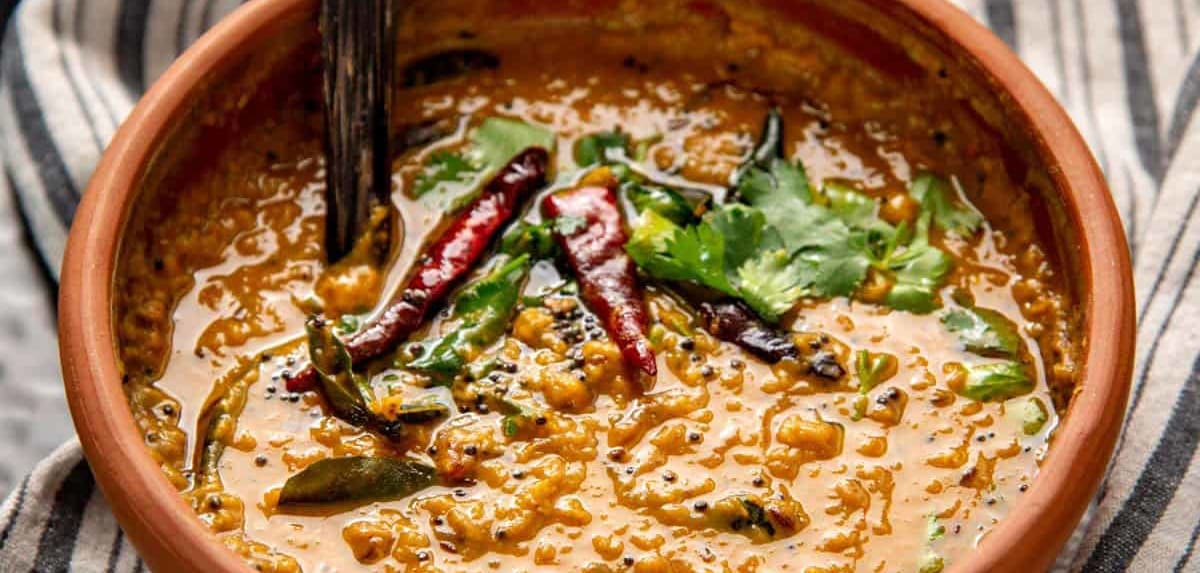
South Indian dal
Ingredients:
- 4 cans lentils
- 4 tbs curry powder
- 2 tbs turmeric
- 1 tsp cumin
- 1 large sliced ginger
- 1 tsp chili
- 2 cans tomatoes
- 2 cans water
- 1 tsp sugar
- 2 tbsp coconut oil
How to cook:
- Heat on low in crockpot for 6-8 hours or 3-5 hours on high
- Serve with rice and fresh coriander (cilantro)
Notes:
I used canned lentils, which are already processed, but a somewhat more budget-friendly method would be to get dry lentils and soak them ahead of time. You can use a hand-held food processor to blend everything if you want a smoother texture. Other recipes also call for the sauce to be prepped by sauté-ing onions and garlic, which I excluded from my version but would add some good flavors. I also found the coconut oil adds a nice body to the stew which pairs well with the ginger. As always, you can increase the spice level by adding more chili or pepper - this version is relatively mild but quite flavorful. You can also serve with naan and yogurt.